

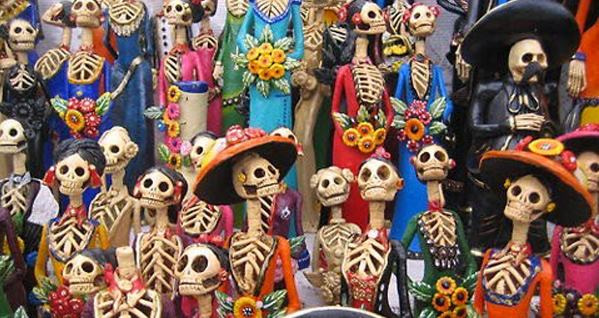
Shopping Galore and Streets of Galleries!
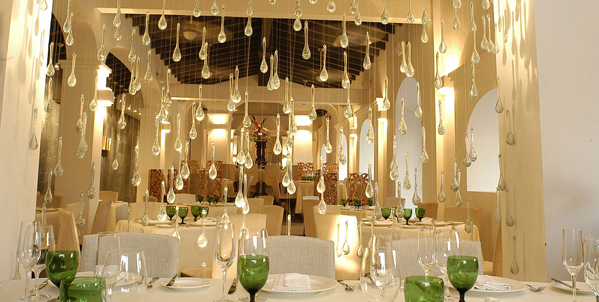
Restaurants for Every Taste and Budget. Tacos to Fine Dining!
Deep Bodywork & Nervous System Reset by Guero
I have been reading a lot about this lately; Nervous System Reset.
It is a slow, focused, holistic approach that works beyond surface tension and influence different layers of the body, including physical, mental and emotional.
Most people live with constant stress, fight & flight mode, without even noticing it — tight shoulders, shallow breathing, inner tension that never fully switches off. It helps shift your body out of a “fight-or-flight” survival mode and back into a relaxed, parasympathetic state where rest and recovery can happen.
“In my sessions, I work with layers of the body and nervous system incorporating work with energy, fascia and muscles to release deep-held tension, help your system return to balance and allow the body to heal itself.
But the mind gets in the way of letting the body heal itself. and is trying to control everything because of different fears and other “negative” emotions (shame, guilt, etc). These different emotions constantly affect the body – sometimes drastically, sometimes slowly, almost unnoticeable (unnoticeable primarily because we are busy to notice, because of our ignorance).
The body notices everything and reacts accordingly (with the help of different tools, such as fascia) – different parts of the body get tight and they pull the body out of balance. The body is all connected – it is one system.
In certain areas to a certain extent energy flow and flow of breath gets interrupted – that’s why the body can’t heal itself properly. Breath and energy are connected.
What I do is I use my intention and focus to “communicate” with the nervous system through touch. Importance here is the right amount of physical influence to convince the mind that is all good and safe, it can let go, relax. By bringing the attention of a person I work with wherever I feel restrictions in the body the person gets out of the mind and gets into the body, gets present and grounded.
So I relax the mind and nervous system of a person and bring their focus to a restricted area. Their energy follows their focus and heals the body.”
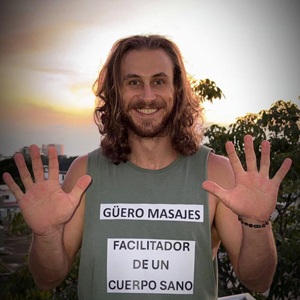
Each session is different, tailored in the moment specifically for each person and their needs.
I went to him because my husband died 2 years ago, and grief causes a lot of stress on the body and mind. Regular massage didn’t really help me much. I read a lot about grief and think I am handling it pretty well, but I know it has taken a toll on my soul and body. So I wanted to give this a try. Two days after my session I was feeling better, feeling “lighter,” my focus was better and my daily afternoon fatigue was gone! I am going to do a follow up session as well.
This is not necessarily a quick fix. The bodywork resets your physical baseline, but if your mind immediately returns to the exact same thought patterns, boundary issues, or stress responses, your body will re-create that tension to protect itself.
Think of the session as clearing out heavy baggage. Moving forward, when a familiar stressor comes up, you have a moment of choice: do you pick the weight back up, or do you handle it differently this time? As you learn to react differently, your muscles and breath can finally start unclenching.
How do you know if this will help you?
- Constant tension: You feel restless, irritable, or on edge even when safe.
- Sleep trouble: You cannot fall asleep, wake up tired, or wake repeatedly during the night.
- Wired and tired: You feel completely exhausted yet your mind races, often relying on caffeine to function.
- Physical discomfort: You experience tight muscles, frequent headaches, or upset digestion.
- High anxiety: Minor interruptions or loud noises make you startle easily or feel overwhelmed.
I highly recommend him! WhatsAPP him for an appointment 331 847 2627
60 minutes $900 pesos / 90 minutes $1,100
He is located across from MacroPlaza, Calle Gonzalez Gallo
Gloria Fiona Brings BURLESQUE to La Catrina Aug 21st

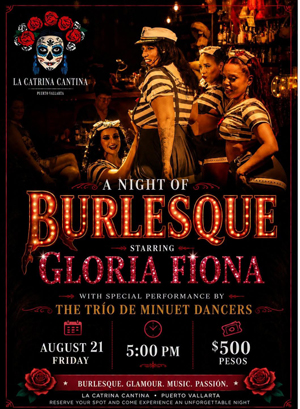
SHE’S BACK!
A Night of Burlesque with the amazing GLORIA FIONA and Trio of dancers!
August 21st 5PM $500 pesos La Catrina Cantina!
I saw this last month and it is HIGHLY RECOMMENEDED! It was a well down show with of course, Gloria’s amazing vocals…..and just a little bit naughty and spicy!
La Catrina Cantina will be a den of glitter, feathers and unapologetic desire.
MESSAGE IRENE FOR TICKETS
If it does not sell out, there may be tickets at the door. But I wouldn’t chance. Last month SOLD OUT!
AVIDA MARKET with David and Cate August 14th

 Avida Market: corner of Insurgentes and Francisco Madero (across from Pollo Feliz)
 August 14
 6:30PM
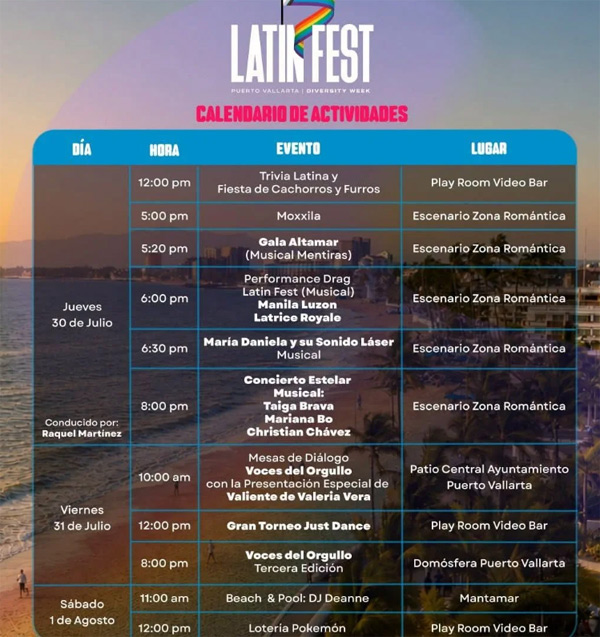
Latin Fest Diversity Week
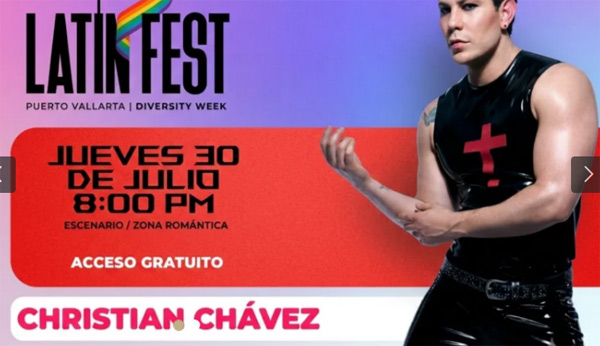
From July 30 to August 1, 2026, Puerto Vallarta will host the Latin Fest Puerto Vallarta Diversity Week, an event that reinforces the city’s position as one of Latin America’s leading LGBTQ+ destinations. Backed by an investment of nearly MXN $7.5 million, the festival will bring together entertainment, culture, and community in the iconic Romantic Zone.
Over three days, visitors and locals will enjoy performances by Christian Chávez, Taiga Brava, and Mariana Bo, along with cultural events and celebrations that showcase Puerto Vallarta’s welcoming and inclusive spirit. More details BANDERAS NEWS.
Celebrate Pride week at ACT2PV

A week of amazing shows at ACT2PV!
Some of them are even FREE (with a 2 drink minimum!)
(Free shows – Best of Broadway, Cher , and Greatest Show – which was AMAZING last year!)
Pride Week at Coco Cabaret & Palm Cabaret

The season is winding down at Coco Cabaret and Palm Cabaret.
This is your last chance to see some amazing shows!
Experience another spectacular week of world-class entertainment at The Palm Cabaret. From the smooth sounds of the Rat Pack to the high-energy anthems of Lady Gaga, our stage is ready to deliver the best nightlife in the Zona Romántica. Secure your seats today!
At Coco Cabaret you see the hilarious Hedda Lettuce, Boys on Fire, the famous Mama Tits, plus the Ricky Martin and Madonna tributes!
PLAN YOUR WEEK: Shows are filling up fast. We recommend booking your tickets online in advance to guarantee your seats.

Puerto Vallarta Gay Pride 2026

GET READY PUERTO VALLARTA!!!!!
- Main Dates: May 17 – May 24, 2026.
- Theme: La Nueva Era: Un Pride Muy Mexicano
- The Vallarta Pride Parade: Thursday, May 21 @ 4:00 PM (starting at Sheraton Buganvilias) Register for the parade at this link here.
- The Vallarta Pride Block Party: May 21, 2026. Immediately following the parade on Lázaro Cárdenas in front of Industry and CC Slaughters.
- Major Ticketed Events: Hosted at STUDS, The Pool Club PV, Industry, Mantamar, and Bearadise.
ALL THE DETAILS ON THE OFFICIAL WEBSITE
ACT2PV FREE Shows and Pride Week

Summer is heating up at ACT2PV!
FREE SHOWS! See Cher! Best of Broadway, The Greatest DISCO NIGHT Show on Earth!
PRIDE WEEK EVENTS AND SPECIAL SHOWS!
Bathhouse Bette & Barry May 19th AND PRIDE WEEK Piano Bar the same evening!
Greatest Show on Earth PRIDE EDITION May 20th! (FREE)
2 QUEENS – Fantasia Royale & Alexis Mateo will be entertaining May 20, 22, and 24th
Special presentation of CHICAGO May 22nd
CHER May 23rd ! (FREE)
Yerba Mala Social Club – Hidden Gem Restaurant!

I have driven down Palm Springs street in Versalles many times, but never noticed this five star restaurant.
I was looking for a restaurant one evening a couple months ago, and they came up as “nearby” and 4.9 stars!
Sometimes diners will give everything 5 stars. Well let me tell you, the first time I dined there they knocked my socks off!
5 STARS!!! It is my new favorite place and I have eaten here 6 times and keep bringing friends.
EVERYTHING, every sauce was fresh and flavorful. Thoughtful attention to detail. After the second time I ate there, I asked them, “you are trained chefs, right?” The average cook is not creating these kinds of delicious dishes! – No offense to average cooks! I like all cooks and chefs!

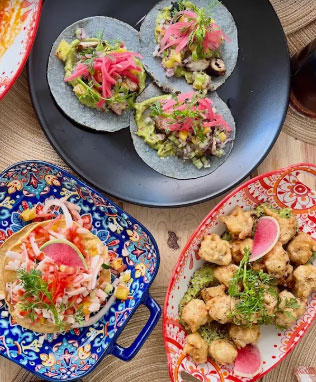
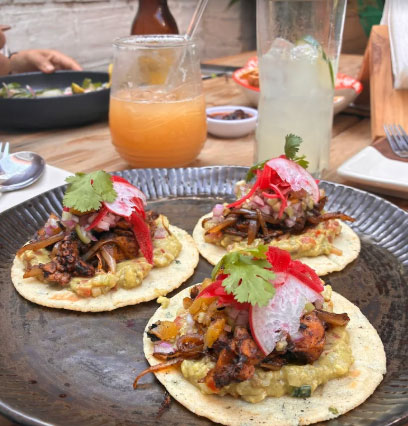

And there are indeed trained chefs. “We opened Yerba Mala in 2024 (we as in Natalia and Williams) we are a couple who studied culinary arts and science, with many years in high cuisine training, we wanted to open something that uses the Gourmet techniques we’ve been using for years for something more casual, that’s why we decided on seafood.
With a bit of creativity we managed to make the every-weekend-food into something a little fancier. We Also love to showcast what our country has to offer, that’s why we offer drinks such as tejuino, tepache, tuba, raicilla, mezcal, tequila, licor de cempasúchil, amongst others .”
The menu items are always changing. It is reasonably priced and they have full bar and do wonderful craft drinks!
I am telling you, this place is amazing!
NEW ADDRESS !!! Pavo Real 197, Las Aralias
https://www.facebook.com/yerbamala.cs/
https://www.instagram.com/yerbamala.cs/
Red Door Bar in Versalles Opens March 22
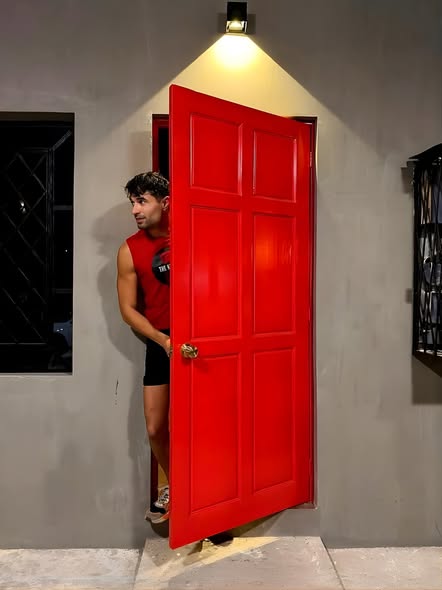
The New Cocktail Experience in Versalles
OPENING MARCH 22nd!
Wet Dreams Puerto Vallarta Stripper Bar – They Will Overcharge Your Credit Card

We DO NOT recommend WET DREAMS Lázaro Cárdenas 312
There are several better stripper bars in town to choose from.
Right next door is 69 ! Anthropology by the river is also very good!
If you do go to Wet Dreams DO NOT USE YOUR CREDIT CARD HERE.
THEY WILL OVERCHARGE YOU!
It’s ok to use a credit card at many Puerto Vallarta establishments – just not here!
On a recent visit there, a customer wanted a Private Dance, for $600 pesos.
The dancer took his credit card and ran it for $6000 pesos! The customer refused to sign for it and left.
The charge posted to his bank account and he is trying to fight the charge now.
IT’S ALWAYS BETTER TO HAVE CASH AT THE BARS!
Fado with Ale Matus and Dabit Azonfeia

I have been in love with the talented Ale Matus and Dabit Azonfeia since we moved to Vallarta a couple years ago.
I first saw their artful talents in Conceirto, That show is full of surprises, with quirky characters and a diverse repertoire that keeps the audience engaged. Imagine a seamless fusion of comedy, music, and circus.
Then I discovered them performing as Tromba Vetusta. Always in pursuit of new things, they have now created Fado. A journey into the captivating and profound heart of Fado, the golden folk music of Portugal.
As they take the stage and Ale starts lighting candles, you know you are in for something special. Someone said, “If there was a magical experience, capable of transporting you to another world, it would be this!” For me, at times, Ale’s voice and vocal styling gave me this electric chills and goosebumps!
The eclectic artistic company Tromba Vetusta invites you to enjoy a concert that pays tribute to sublime songs of this genre, musical works by artists such as Madredeus, Mariza, and Amália Rodrigues. Performed by an unparalleled musical ensemble, featuring the powerful voice of Alejandra Matus accompanied by virtuoso musicians on violin, guitar, and accordion.
An intimate acoustic concert amidst candlelight and drinks, a perfect setting to celebrate and embrace the emotions within us, touching the very depths of the soul.
They are so passionate about their craft, you can see it in their faces. They feel the music in their soul, and you feel that too, watching them!
They are performing Fado once a month at Nacho Daddy.
Next one is March 1st at 5pm.
GET TICKETS! January and February shows were sold out!
Liberace and Judy @ Act2PV 2 shows only!

Two Legends. One Stage. A Show That Never Was—Until Now!
World-renowned Liberace tribute artist David Maiocco joins forces with acclaimed Judy Garland tribute artist Laura Roth for a glittering evening of music, laughter, and old-Hollywood glamour.
David Maiocco, is a passionate multi-talented performer with experience in film, television, and stages worldwide, he has toured with his Liberace Tribute to rave reviews!! David always has fun facts and witty conversation to add to the show!
Laura Roth is known for her one-woman shows where she impersonates iconic female performers, including a popular tribute to the legendary Judy Garland alongside other divas like Liza Minnelli and Barbra Streisand, often appearing with tribute artists like David Maiocco as Liberace for special events. She combines musical talent, comedy, dazzling costumes, and storytelling to bring these classic performers back to life in vibrant, heartwarming shows.
Experience the wit, warmth, and showmanship of two icons who defined an era—reimagined together in a spectacular performance you’ll never forget. It’s a nostalgic trip through Hollywood’s golden age and a reminder that true legends never fade — they just find new ways to shine.
🎹 Two Shows Only!
January 11 & 18 • 5PM • ACT2PV TICKETS
Freddy Otello delivers Aretha Franklin beginning Jan 18th at ACT2PV
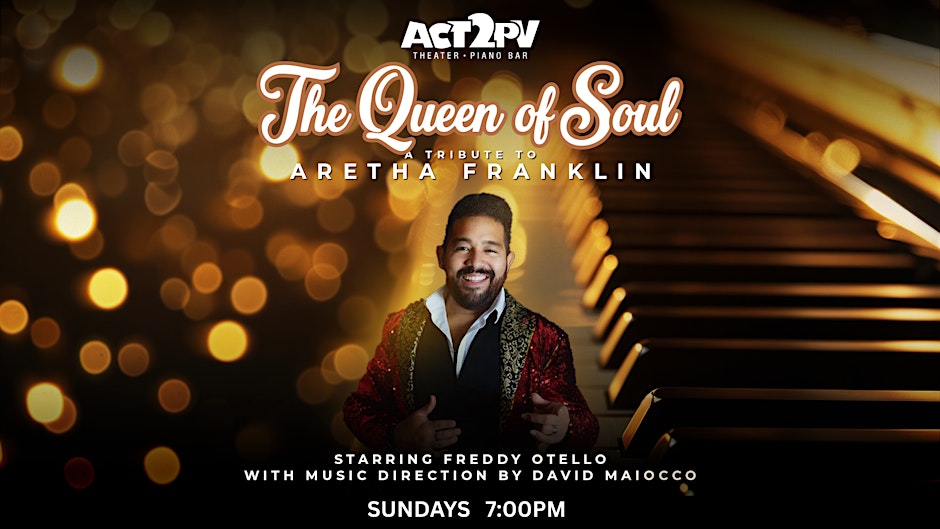
I have been waiting for this!!!
I have seen Freddy Otello perform around town and he is great!
Known for his incredibly high and versatile voice, Freddy moves seamlessly from the elegance of opera to the heart of pop and soul, making every performance unforgettable.
In this heartfelt celebration, Freddy pours his passion into Aretha’s most iconic songs, from the power of “Respect” and “Think” to the soulful beauty of “(You Make Me Feel Like) A Natural Woman.” With each number, he honors Aretha’s legacy while adding his own unique flair, creating a show that is both nostalgic and refreshingly new. SUNDAYS AT ACT2PV!!
This is more than a concert—it’s a joyful journey through gospel, R&B, jazz, and soul, delivered by one of Vallarta’s most treasured performers. Whether you’re a lifelong Aretha fan or discovering her music anew, you’ll be blown away by this entertainer!!
Biggest Christmas Tree in Mexico at Los Muertos Pier Puerto Vallarta
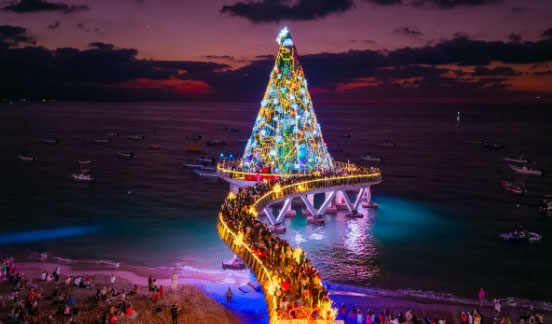
The BIGGEST Christmas tree in Mexico is at Los Muertos Pier in Puerto Vallarta!
30 meters! Approximately 100 feet!
We did NOT take these photos – I did see it in person – and its very cool!
Check it out!

Christmas with LIBERACE at ACT2PV Dec. 17th

ONE NIGHT ONLY!
Get into the Holiday spirit with LIBERACE!
Wednesday, December 17
7:00 PM
It’s the most wonderful time of the year—and nobody does Christmas quite like Liberace! Get ready for a glittering night of holiday cheer as David Maiocco, one of America’s “Top 10 Piano Men” (and Vallarta’s own showman-in-residence), channels the legendary Liberace in all his rhinestone-studded glory. With twinkling lights, dazzling costumes, and a piano sparkling as brightly as his jewelry, David brings the joy and flamboyance of a true Liberace Christmas to life.
( David Maiocco, is a passionate multi-talented performer with experience in film, television, and stages worldwide, he has toured with his Liberace Tribute to rave reviews!! David always has fun facts and witty conversation to add to the show!)
From heartwarming classics to playful carols, every note sparkles with warmth, wit, and nostalgia. Whether you grew up watching Liberace’s iconic holiday specials or just love your Christmas with a little extra glitter, this show is pure holiday magic wrapped up in music, laughter, and plenty of sequins. Don’t miss your chance to toast the season with a show that will leave you glowing long after the final chord!
SEE YOU THERE! TICKETS!
JETS Club PV Naked Nights for Men

What started as a Techno club has evolved into a naked party club!
Located at Insurgentes 330, Zona Romántica, by Corner Bar and Act2PV.
Take a walk on the wild side………...JETS
Puerto Vallarta Malecon Expansion

Like it or not, the Malecon expansion to the North, has begun.
After a loud outcry of NO from some of the public, the city allowed residents to vote on the topic November 21 to 23. Only 5000 people voted …. and the Malecon construction is moving forward. Workers say they are on schedule to complete it by the end of the year.
The expansion, which began on October 13, is concentrating its efforts on the rehabilitation of Mexico Avenue, spanning from Argentina Street to October 31st Street in Cinco de Diciembre neighborhood. While the initial focus has shown remarkable progress near Hidalgo Park, the overall goal is to strengthen the city’s pedestrian infrastructure and enhance the tourist experience along the city’s iconic boardwalk.
A key element of this initiative is making the area much more accessible for everyone. Improvements include leveling sidewalks for easier access, adding new seating and planters, and improving the existing bike path. The elevated surface will improve stormwater collection through upgraded drains, while standardized materials – porphyry stone, washed concrete, and black gravel designs inspired by Wixárika art – will create a unified look throughout the area. (Banderas News)
Gay Tuesdays Puerto Vallarta – Act2pv and Coco Cabaret

Tuesday evenings at Act2PV @ 7pm
with A salute to Bette Midler and Barry Manilow, from The Baths to the Big Time!
Starring David Maiocco & Care Elizabeth!
A celebration of Bette Midler and Barry Manilow!
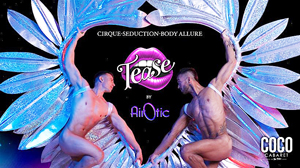
ALSO Tuesdays at 7pm, get over to Coco Cabaret and see this amazing show of sexy acrobats! AirOtic TEASE stars a Cast of World-Class Acrobats! Marvel at the incredible aerial stunts performed by these remarkable performers.
AirOtic is a unique evening of immersive entertainment that blends circus with cabaret. Extravagant costumes and suggestive choreography, Adonis-like physiques, incredible acrobatics, and circus skills are sure to keep you on the edge of your seat! TICKETS HERE
*****AirOtic also performs FRIDAYS at 9PM*****
ACT2PV Opening Night White Party Nov. 1st

ACT2PV ALL-WHITE GALA & SEASON PREVIEW
We invite you to join us for an unforgettable evening of sophistication and style at Act2PV’s All-White Gala on Wednesday, November 1—a dazzling celebration of the launch of our brand-new season! (This event is sponsored by Casa Karma.) ✨
Dress in your finest all-white attire (don’t forget the sparkle and bling!) and enjoy cocktails with elegant passed appetizers! Then you’ll be treated to an exclusive sneak preview of some of our 2025/2026 season shows in the beautiful Casa Karma Red Room!
FEATURED PERFORMERS:
Best of Broadway
The American Songbook, starring Luis Villanueva
Circoncierto, starring Ale Matus & Dabit Azofeifa
Jazz Divas, starring Erika Marin
Moonwalk, starring the one-and-only Montse
The Gabest Show on Earth, featuring Gabe Arciniega
Stephanie Watts Wright – fresh from her Broadway debut
Sarah Joy – soprano extraordinaire
Canadian Divas, starring Vallarta favorite, Bobbi Goddard
The Cher Show, featuring Gabriela Heart
Rockapulco, starring Gabriela Heart & Alberto Ponce
Power Keys, featuring David Maiocco & Dabit Azofeifa
Legends of the Steam & XanaDUO, starring Cate Elizabeth & David Maiocco
Liberace, featuring one of the world’s “Top10 Piano Men,” David Maiocco
And when the curtain comes down, the night continues in the stunning Ovations Piano Bar, where David Maiocco will be at the keys for a fabulous PIANO BAR experience—the perfect finale to a magical evening. $500 pesos